 Carla here! Let’s talk about wool.
Wool is a miracle fiber. Seriously… sure, there are all these fancy technical fibers now that do magical things, but wool offers a ton of fantastic features all in one fiber! A wool blanket on a bed offers warmth and weight as well as breathability. A wool sweater can keep you just warm enough either walking through the parking lot in January or sitting at your desk in the over-enthusiastic AC in July. It’s odor-resistant and bacteria-resistant! The structure of the fiber keeps it cleaner longer. It absorbs moisture away from your skin. It breathes! I’ve worn wool in intense heat and humidity and been more comfortable than I would have been in cotton.
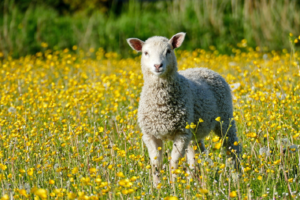
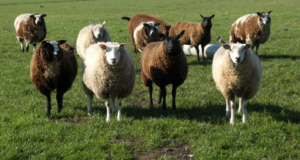
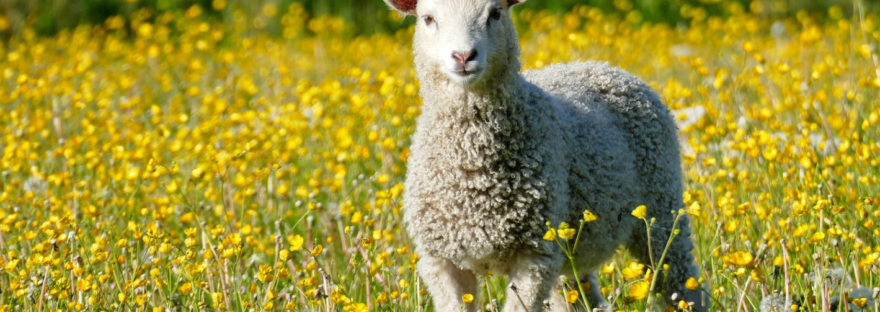
Sheep, the orange cats of wool producers, come in many, many different breeds and each of their coats provide slightly or massively different wool types, but that’s a discussion for another day. For now, it’s good to know that wool is sheared from the sheep regularly, usually with clippers that look like beard trimmers on steroids. Sheep need to be sheared because, thanks to ages of selective breeding, they do not shed naturally. (In fact, it’s sad if they aren’t groomed for years. Shearing prevents overheating, parasites, blindness and mobility issues. We humans created these freaks who don’t shed, so we need to keep them comfortable and healthy.) Shearing doesn’t hurt sheep. They become accustomed to the practice as lambs and tolerate it just fine. Some spunkier ones might have days when they’re spicy, but a good shearer can keep them safe and comfortable.
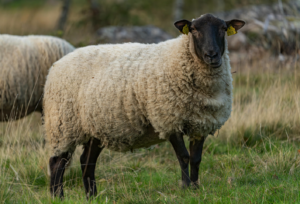 Personally, I adore wool. We wear wool socks and I keep a wool blanket or two on my bed year round. Why? Wool offers insulation. Wool not only keeps you warmer in colder weather, but it’ll keep you comfortably cooler in hot weather. The tiny air pockets created by the crimp in the fiber offer the insulating buffer for temperature regulation. And it breathes! Wool is hygroscopic – it absorbs moisture (including sweat) and wick it away from your body, leaving you more comfortable. In fact, it can absorb up to 30% of its weight in moisture without feeling damp. And while the core of the fiber is absorbing that water vapor, the scales create a hydrophobic surface that can make liquid to bead up and roll off the surface.
 Then there are the more boring features. It’s elastic and very resilient and durable. Individual fibers can stretch 20-50% which allows spun fibers some give in a final product, preventing wear and damage. Its durability is further supported by the scaly structure of the fiber which offers high tensile strength (the maximum stress a fiber can withstand being stretched or pulled before it breaks).
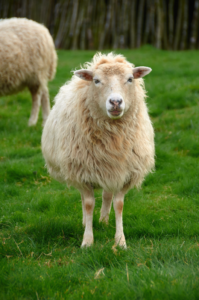 Wool is also fire resistant. It has a very high ignition point (~1100° F or ~600° C) and does not melt or drip like a synthetic. In fact, if typically burns out on its own if there’s no other flame source (i.e. you’re not holding a match to it) because, to keep burning, it requires a higher concentration of oxygen than we have in our regular air. In fact, you can still get fire blankets made of wool.
Wool felts. This is a pro and a con. With heat, moisture and agitation (i.e. a washing machine), the scales on the individual fibers interlock with each other causing it to felt. This is great if you’re doing it on purpose, not so good if someone threw your favorite sweater in the wash on hot.
Caring for wool is not complicated. Many garments and wool blanckets need simply to be hung out in the sun on a windy or humid day. This allows the fibers to breathe and neutralizes odors. If you can do this with your wool sweaters, blankets or suits, they’ll last longer because you won’t have to launder them or dry clean them as often.
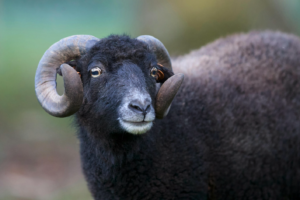 Some wool, like superwash Merino, which you’ll often see available as sock yarn, is marketed as machine washable and dry-able. I’ve found that it depends on your detergent, water makeup, water temperature and dryer temperatures a great deal. I used to just throw my superwash wool socks in the washer and dryer with my t-shirts. No problem! However… I’ve moved to a different region (well water with tons of minerals), and switched washing machines and detergents. The result? Socks that used to be fine to wash and dry started to felt a bit. Now I wash them more gently (cool water, still in my washer though) and put them on a rack to air dry. Machine washing superwash wool is definitely an art and your mileage may vary (YMMV).
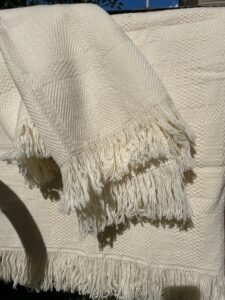
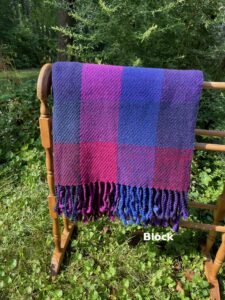
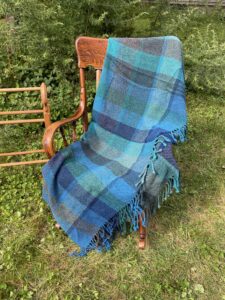 We offer a variety of wool blankets and throws in the Etsy Store. We suggest having these blankets dry cleaned for best results. You could wash them gently in a tub, for sure, but here’s the handiest thing about wool: it’s odor-resistant and bacteria-resistant. Lanolin, a naturally occurring waxy substance, provides a protective barrier that reduces bacterial buildup. The scales overlap like shingles that prevent dirt from easily getting deep into the fiber and fabric which means less laundering is necessary in general!
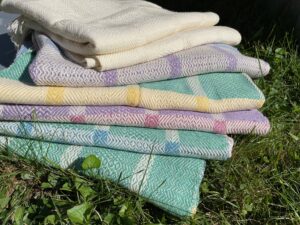 However, beware of wool moths! You might remember that during the Pandemic folks weren’t wearing their wool much (because we were all sitting around in pajamas and sweats!) and a lot of folks ended up with moth damage in their favorite and/or expensive items. Moths love laying eggs on your woolens and the eggs hatch when temperatures are above 70° F. To avoid damage from wool moths, shake out your woolens throughly (perhaps air them out in the sun too!) and store them in airtight plastic containers or bags. You can also use cedar or lavender or any number of herbal combinations to repel them. Freezing woolens for 72 hours should destroy the eggs, but I always shake and air out things after freezing. If you can’t store them in airtight containers, shake them out often when you’re not wearing them regularly. Bags that comforters or sheet sets come in are helpful in a pinch, even if they’re not airtight, as they’ll keep most moths out so they can’t lay eggs on your blanket.